Friday, March 9, 2012

Zombie relaxation activities stimulate learning with killer endorphins


Happy Spring Break everyone! 

In honor of being done with work for a week, and returning to a semi-conscious Undead state, I thought I'd post my favorite "just for fun / relaxation" activities that we do in my classroom to channel our inner Zombies.

#1: PLANKING!  Have you discovered it yet? Kids love it. Adults love it. A girl even planked on American Idol this year while her sister auditioned. And it's just plain fun. You lay down on your tummy, stretch your body out behind you, and lift your legs and head a few inches off the ground. You look straight down at the floor, and hold your hands out at your sides, palm side up. See how long you can balance. It's a good workout if you can keep it going.

We have tried it on desks, the floor, my table, lockers, and anywhere else that we don't mind laying down and getting a little grit on our cheeks.

#2: POWER NAP TIME! We have pajama day a few times a year, and there's nothing better than turning the lights off, putting your head down on the blankie you brought, turning on some quiet music, and attempting to doze for 5 minutes. It never fails that I actually have a few kids who are so tired, they fall asleep right away and squint crazily when I turn the lights back on. 

Yup, that's me. The zombie math teacher. Napping AND planking. In blue snow flake jammie pants. Somehow my seventh graders still take me seriously!?!? 

#3: Meditation Time. I use this at random times, such as before a test or during our prescribed learning periods (PLP is the kid version of the kind of a PLC a teacher would have). We work on deep breathing, stretching individual parts of our bodies, clearing our minds, and trying not to laugh. Several of my current and past students have anxiety and sleep issues and they claim that this has really helped them focus and feel less nervous all the time. 

We talk about how meditation can help them calm a racing mind to the point that they are able to almost hypnotize themselves to sleep. It is also a very real issue for their growing teenage bodies that they don't stretch well or often enough; whether it be before gym class, sports, or just to ease growing pains. The benefits of stretching, and yoga related activities, are well documented, but not put into practice nearly enough.

#4:  Stare at the crazy picture until you go cross-eyed. Guaranteed to be attention-grabbing. Whether it's an optical illusion, a "wrong" nature picture, or some other cheesy, picture from Google Images, your students will get the brain break they need, and be able to focus on something new more quickly. 

This inverted flag is one of my favorites. Find a white space either on your computer monitor or the wall or a whiteboard, where you can look shortly. Don't forget that. Now stare at the center of this reverse flag, blinking as little as possible, for 1-2 minutes. Then look quickly at the white area you chose. You should see the real American flag colors super-imposed on the white space! It's the reverse image that has burned itself onto your retinas! Way cool. Click the flag to learn more about other neat color and image tricks.

#5: Crossing the Midline and other "get up and move" activities. Did you know that you can concentrate better if you have activated both sides of your brain? You can "unstick" the right and left brains by crossing over physically, like doing the "cross your arms, and then clasp your hands, and then pull them up through your middle" and back down. Or windmills. Or diagonal toe-touchers or bicycling. Just getting out of desks for a 2-minute talking break, can be really powerful. 

How long can we grown-ups concentrate in a meeting before we zone out? Yet we expect students to do it for hours upon hours upon hours... with longer and longer core classes. Some of the block classes I've seen can last nearly two hours with no break for bathroom, or drink or anything. How inhumane.

 
#6: Embracing school dress-up days in the class room. So what, it's hat day. Let them have fun wearing their costume in class! Let them show off a little. The humor it engenders will make the lecture more memorable. If the costume gets distracting, they can always take it off later.


This was during a class pop quiz. Somehow, all the students managed to get A's and B's on the quiz, including Iron Man. And you can see just how many class mates are giggling in the background.  Even super heroes need to pass math class. 

In conclusion: Educational time is very important. But so is the ability to concentrate. Human beings can absorb maybe seven new pieces of information at a time, before taking a break to process. Everything after that is lost. So you can kid yourself all you want that you are "using your classroom time wisely". But ask yourself this... when was the last time you gave your classroom a brain break? A month? A week? Even yesterday?

Well guess what... they need it MULTIPLE times per day, 1-2 times per class period even in a 50-minute block of time. So get them out of their desks! Give them a break! Make them laugh and smile for a while. The gains in quality of learning will greatly offset any losses of class time.


Saturday, March 3, 2012

State mandated testing used for Good! Not Evil!

Greetings oh fellow mathematicians.

It's another epic Saturday night, complete with Sandwich King, Restaurant Impossible, Worst Cooks in America, and other DVR culinary delights on Food Network. Granted, I did rent Cowboys vs. Aliens on Redbox, but the hubby doesn't want to watch it, so I guess it will keep until morning. Or I'll pay a whopping extra $1.50 for another day. 

We are a week out from spring break in my district, and after our lovely Snow Day on Wednesday, us teachers have been scrambling to decide whether to cram in the current unit, or carry it over break, or make it into another full week. The things students never think about... how snow days REALLY mess with a unit. Especially those that have been timed out nearly to the second, and now we are down a whopping 75 minutes x 60 seconds... AHHHH!!!  

Alas, in the preparations for completing said unit, I was lucky enough to work with an open-minded colleague to branch into the territory of flex grouping. It takes a lot of guts to open up and share students mid-year. Considering how fiercely independent most educators are, to open up your classroom, share students, and be willing not only to cross-teach, but to share strategies and embrace the interconnectedness that comes from real teaming, is really powerful. It is nearly impossible not to become a better teacher, from the experience of sharing students and truly collaborating on content.

I can only imagine what it must feel like, being sorted into groups, if the intent is not explained. I was quite clear with my students, that we sorted students based on their performance on a particular strand of the state test, and that our goal is to push everyone into a higher bracket, from wherever they are. 

Students are surprisingly receptive to understanding that it is OKAY to not be the same as everyone else, when it comes to prior knowledge and ability level, and speed of acquiring new skills, for a particular unit. I have not had a single complaint from a student or parent, that said that it was a bad idea, to try to reach each individual student in a speed and content difficulty, appropriate to their skills. 

Would you want to compete in a marathon with runners far surpassing your own personal preparations and speed and age/gender? Would you want to be last in "their" class, or "best" compared to your own personal "best"? Don't we all, in the end, want to feel we are pushing ourselves, past our own prior expectations? And to feel we are doing the best with what we were given to work with? And to know we tried our best?

So here we are, half way complete with testing season, and I am surprisingly optimistic as to the benefits of multiple testing indicators in a current year. My team has embraced the goal of improving student retention and skills, and to show growth from winter to spring on all measurable indicators. We are already beating last year's data by 5 percent (comparing this year's February, to last year's April data). So by spring, we hope to double that growth. As professionals, shouldn't the goal of any SMART goal, or other goal, be to continually look for improvement, and to absorb what has worked, and ditch what hasn't worked? In that capacity, we are in a win-win situation. 

I am not sure how many other districts, states or countries can say the same. 

So my question, to my wonderful readers, is... what have you tried that has worked? or hasn't worked? Do you have a coworker who is holding you back? Are you getting push-back from somewhere else? Is your funding being cut? And in the long run, what are you willing and able to do about it? Because... let me tell you... having embraced the data, and used it for GOOD, versus EVIL, and as a TOOL, I have found many benefits to seek out the greater good, in the long run, than any evil repercussions resulting from "over-testing".

So is testing "real, or not real?" as Peeta Mellark says in Mockingjay, testing is as REAL as you make it! Do you embrace testing as a tool for change? Or as a punitive device? Because your students are watching you. And your attitude and integrity will make all the difference as to how they take the tests, and interpret the results of said tests, and how they feel about the results. 

Shouldn't the end goal be, that they tried their best, and they look for areas to improve? Because if it's not, then what's the point to going to school at all? Why don't we just go into the work force at age 14, if we're not going to even try to become better people? And learn from our mistakes... Hmmmm..... 

Wednesday, February 29, 2012

Zombie Snow Day!!!!!!!!!!!!!!!!!!!!!!!!!!!!!


What the Zombie Teacher's students do on a snow day.


What Zombie Teacher eats for breakfast on Snow Day. Blueberry pancakes! 

(with no brains)


The mess people think Zombie Teacher will be shoveling on Snow Day.


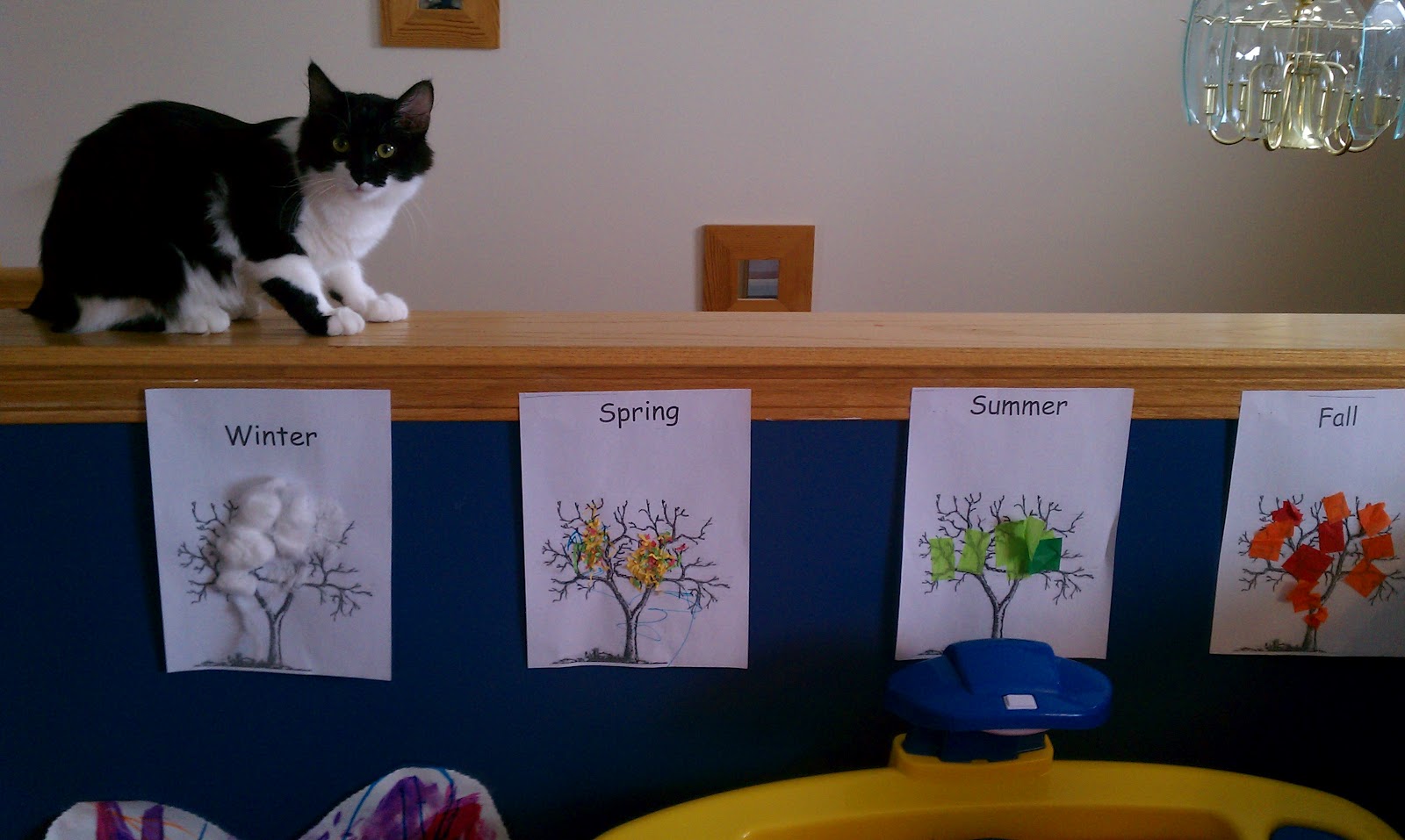
Zombie Cat identifies the season of the Snow Day.


What Zombie Teacher will ACTUALLY be doing on Snow Day.

Sunday, February 26, 2012

Epic Battle: Zombie Teacher vs. the Dreaded PENCIL


Another trimester has come and almost gone. We are nearly two thirds of the way through the year! Very few seconds were ill spent, which sure does make the time fly. Being a teacher also puts the education of my own children into its proper perspective. 

Take the conundrum of pencils. 

We currently have 6 pencils in our drawers at home. They are either semi-dull, dull to the point of unusable, or have never been sharpened. Do we own any pencil sharpeners? No. I mentioned this to a fellow teacher at school, and he said that he also had no sharpener. Why spend the money when a knife works just fine?

We also have staples, but no stapler; a pile of dried out pens and highlighters still sitting in the cup, and several dull scissors. I think we have a couple paper clips in the back of the utility drawer. We also have 4 flat head screw drivers, but I couldn't tell you where our only Phillips screw driver is to save my own life. (see knife comment above!)

In the spirit of modern times, I have started to wonder if the old ways of well-stocked desks are a thing of the past. How often do we use good old-fashioned hand tools like pencils in our every day lives anymore? What is their purpose when we have computers? And erasable pens? And touch screens that allow us to write with "pens" ON the computer? Is it worth the battle to expect students to bring pencils to class every day, when there is so little need for them in their future lives and careers? 

Because I have tried everything. Warnings. Parent emails. Sending notes home. Trips to clean lockers. Trading for a shoe. Writing their name on the board. Just giving pencils out for free every day until I'm out. And the pencils still will not come. 

On any given day, there are at least 3 students in every class who forget a pencil. They have pens (some erasable, some not). They have markers. And sharpies. And gel pens. And highlighters. But a pencil? PSHAAAAW!  And if there is a pencil, chances are it's the fancy refillable kind with it's very own size of lead that no one else has. Aaaand it's empty.

I can't say myself that I find pencils to be a particularly efficient or motivating tool. They must be sharpened, which requires either prior planning or verbal permission to get out of one's seat, thus drawing attention to the sharpener and often disrupting instruction time. Even electric pencil sharpeners tend to jam easily. I think I went through 4 during my first year of teaching, at my own expense of course. 

Then, there are always a few students who forget that colored pencils jam and dull the sharpener, rendering it useless for the next customer. And worst of all, the ultimate embarrassment, is after all of this drama, having to enter the neighboring classroom to use THEIR sharpener! Thus, many students choose to sit at their desk and simply not do any work at all, because they forgot (or intentionally didn't bring) a pencil. 

Which I cannot and will not accept.

The reasons for needing pencils in education are dwindling as well. State and school tests are often online. Students can fix errors on tests just as well with an erasable pen, as a pencil. Teachers have original and fancy correcting tools of their own, totally unique in color and format to their students, and very few grade with the old-fashioned nasty red ball-points anymore. Not to mention that a vast amount of student work is now done on the computer. Assignments can even be sent via email to the teacher, sans printing!

So we come to a cross roads, as educators who were educated in the twentieth century, when the pencil was hallowed as "the" tool. Our students, born and educated in the twenty-first century, avoid pencils like a zombie plague. Who will win this epic battle? Zombie teacher? The pencil? The sword? The pen? 

Only time will tell. But while we wait for the outcome, I may just have to buy me one of these fancy Ork pencil holders. (please note that there are, count 'em, NO PENCILS in the cup at all)


Tuesday, February 21, 2012

New Interdisciplinary Unit - Walk Two Moons

Happy Tuesday to everyone! It feels like Monday, after having Presidents' Day off. We almost forgot to bring the garbage and recycling cans down. Which is really really not pretty in a house with 3 boys, 2 cats and a dog for Mommy to clean up after. Having Mondays off really messes with the rhythm at school too, for kids and teachers alike. Is it band or choir? My homework is due on Wednesday? You mean that's TOMORROW??? 

The day off also messes with the nightly TV watching schedules, making a decent bed time nearly impossible. Take last night for instance... my husband and I started Moneyball at 9:30, thinking no problem! Oh wait, it's a two-hour movie!! But it was worth it. And oh, the data connections with RBI and ERA and errors, etc... I have even spotted students reading the book at school! Have any of the Language Arts teachers written an Accelerated Reader test for that yet??? 

Continuing on the theme of books and TV and other connections, I have to give a shout out to my wonderful Language Arts team member (she knows who she is) who encouraged me to read Walk Two Moons recently. The hope was that we could teach some interdisciplinary themes related to mathematics and nature, and the interconnectedness of people and events in our lives. 

In Language Arts, the students are learning about "string theory", as they read the book and watch the new Fox show "Touch". The son of the main character is autistic, and is only able to communicate through numbers. The Fibonacci Sequence is referred to verbally and through phone designs and other visual cues in the pilot episode. 

In Science, our team teacher is showing the students how the Fibonacci Sequence shows up in nature, in common patterns like an unfolding frond or a snail shell. Some of these interdisciplinary connects were planned; others just randomly cropped up and shocked us teachers into silence. 

In math, I decided to look into the major "red strings" in Sal's life, and how her connections grow as she journeys both physically and metaphorically through the events of the book. Starting with her birth, and working forward through her immediate family life, and issues, then through the main events of the story and beyond. It looked an awful lot like a mind map web activity when I was done (or students could do this themselves). 

I won't give out any spoilers that might ruin the book for those of you who haven't read it; suffice it to say, I was shocked to find that the number of connections in the book grows in an almost LINEAR pattern!!! WHAT!?!?!

Which got me thinking, is this just a total fluke coincidence? Or would students come up with the same data? So I wrote a math lesson, which I hope some day to expand into a series of math/language arts interdisciplinary topics (whenever I get around to writing it). Keep an eye on my Teachers Pay Teachers site for it, maybe this summer? In the mean time, you can get a non-copyable picture version if you just can't wait to try it yourself. I will report back with results next week from my own classes. Huzza Huzza.


P.S./Related Side Note: My husband and I had a kid-free night on Saturday at the cabin in Hinckley. We decided to try out a new restaurant on the Wisconsin side of the border, in Danbury. We normally hit up the Wild Waters Sports Bar which has great food and a north-woodsy welcoming atmosphere. On a whim, we switched things up and drove to the LumberJack Saloon & Eatery on Webb Lake instead. As we ventured further and further into the middle of nowhere, surrounded on both sides by thick pine and dense underbrush, we started to wonder if we were lost! 

After nearly half an hour of intermittent and relatively unhelpful Garmin App driving directions, we finally located the restaurant parking lot, shuffled our penguin walks across the iced gravel, and entered through two sets of doors into the little neighborhood restaurant. No sooner had we opened the door, when a curly haired, blonde woman stood up and shouted, "CHRIS!?!?!" at my husband! (Which is his name). 

Turned out to be a coworker from a job that Chris hadn't worked at in close to 7 years. They just happened to be at their cabin as well, and had also just happened to decide to go out that night. Call it random, or coincidence, or string theory, or whatever, it was BIZARRE. Like the Six Degrees of Kevin Bacon. Did you know he has his own game now!? I'm telling you, it's ALL RELATED!!!


Monday, February 20, 2012

Zombie Teacher rants on Teacher Pay Misconceptions

Welcome to the jungle of yet another year of political mine fields. No matter which side of the isle you happen to be on, everyone has an opinion on education funding and what we should (or should not) be paying teachers. My own state of Minnesota is debating whether or not the time is right for a hard pay freeze.

It's pretty obvious who falls on which side of the debate - Republicans for the most part want to bring the deficit down by cutting taxes, which therefore means less money for schools, so teachers in their opinion should shoulder some of the burden of reduced wages. While Democrats, on the flip side, want to increase taxes on the wealthy to help shoulder some of the tax burden that would pay for needed services and education costs.

We can all argue until we're blue in the face about whether or not taxing the rich to increase services, or cutting taxes to stimulate growth, is better for the nation, but there are some realities in education that simply cannot be overlooked anymore. I am offering a teacher's perspective of what it feels like financially to BE a teacher, instead of what people are hearing from politicians and their often erroneous statements.

After you've looked at the data for yourself, we'll see how many people feel that teacher pay has really "risen", while the rest of the market is in a recession. And for those nay-Sayers out there who still think that Minnesota pay is ahead of the curve, check out the NATIONAL pay averages here. Even on a national average, which is better than more than half of the states out there, "The salaries of public school teachers have generally maintained pace with inflation since 1990–91."


MN Teacher pay rates is cited directly from MN House of Representatives Research site:
http://www.house.leg.state.mn.us/hrd/databook/tchrchar.htm

The inflation data listed in the middle column of the table is taken from:
http://www.usinflationcalculator.com/inflation/current-inflation-rates/

Average insurance cost data is from an 8-page Whitehouse report published in 2009 and more recent publications. I used a 40% contribution rate which is actually lower than what I contribute, but still much higher than the contributions of non-teaching professions that run closer to a 25% employee/75% employer distribution.

As a math teacher, I'm pretty good at Excel formulas. I took the published average salaries, reduced them by the factor of inflation that applied for the given year, and then subtracted the 40% of typical health care contributions that employees are expected to pay. Even before these calculations, you can look at the bottom row of totals in yellow, gray and red. Notice that while teacher salaries may appear to have increased by 17% from 2003 to the present, inflation has grown by 22% and health care increases have ballooned to 68%.

So while it may appear that teachers have "continued making more money each year", what it really equates to is a whopping net increase of $2972 over 8 years, or $370 per year. Take into account how much additional training the "average" teacher has obtained during those 8 years; either returning to college for a masters, seeking outside training from the school day, or just plain spending money on their classrooms (which we all do) and that increase is wiped out in the blink of an eye. Also keep in mind that this doesn't include the additional dental insurance, union dues, and mandatory TRA contributions that we pay. Lucky us! Those are tax-deductible. 

And don't even get me started on "not working summers". I don't know a single teacher who doesn't either teach summer school, attend committee meetings (sometimes paid), check emails, stop in to clean out the classroom, in addition to the hundreds of unpaid hours we spend correcting papers and updating our websites. What other profession has such a high out-of-the-work-day expectation of its employees?

This graph is a visual representation of the actual and adjusted columns from the table above. Isn't it shocking how different they look? Even back in the 1990's when the economy was booming, education was still putzing along with average increases of $500-$1000 per year, which is the same as it is today. Except for sky-rocketing medical costs. So the majority of teachers and other state employees continue to make less and less money each year, even IF we are lucky enough to get a union-negotiated raise.

So MN legislature... bring on the "hard freeze"... like a pay reduction is something new to teachers!?!? It's just an extension of the school distribution "deferments" that will never be repaid. And the state funding cuts to schools, with the expectation that local government levies will pick up the slack. You're not fooling anyone, politicians, with your "saving teacher jobs" line. Whose fault is it that the state is out of money!? It's YOUR FAULT!!! Because you spend all our tax-dollars on your high-horses pushing party-driven agendas that the other side will NEVER AGREE TO, instead of looking at realistic compromises using rational logic and remembering the original intent of taxation and common good that our country was founded upon. This video says it all.

http://www.kare11.com/video/default.aspx?bctid=785321882001

In conclusion: I am a trained professional with 5 years experience, two bachelors degrees and a masters degree. I don't buy new clothes. My boys wear hand-me-downs whenever possible. When the batteries in their toys die, they rarely get replaced. We don't take expensive vacations (or hardly any vacations). I drive a 2000 two-door Alero coupe. I pay family rates for medical and dental insurance. AND my family is HEALTHY. I have a small, but annoying monthly college payment that will require another 14 years to pay off, at the rate I'm going. And another not-so-small amount of revolving credit card debt. I've written a book that makes a pittance. I sell teacher materials on and off-line. I do freelance book reviewing and sell an occasional item on eBay. I have occasional garage sales and also attend them. I shop at Walmart because I can't afford Target's prices. We have very generous parents and in-laws.

And we still *barely* make ends meet each month.

Saturday, February 11, 2012

Tragedy strikes in small-town Montrose a few blocks from home

My family's thoughts and prayers are with the family of Hayden Solien. We often take it for granted that small town life is safe and quiet and slow-paced, and the tragedy that occurred to end 7-year old Hayden's life on Friday has shaken our community to the core. While waiting on the sidewalk for his bus to pick him up for school, Hayden was hit by an out-of-control car that had just ran the only stoplight in town. Both the boy and the driver of the vehicle were killed. Below is a link to the full article of what happened.


As parents of two boys, my husband and I had a very hard time with this news. We deliberated about whether or not to discuss what had happened with our 2- and 4-year old children. Would they understand what had happened? Could they generalize about the danger of cars and street safety enough to apply it to their own sheltered lives? I didn't think it was appropriate. But after driving by the accident scene this morning, where a touching memorial of teddy bears and flowers and a cross had already begun to form, I changed my mind.

So we stopped by the store and picked out a soft little teddy, all the while I was trying not to get teary-eyed thinking of my own boys, and how precious they are to me. And the deep sympathy I feel for Hayden's family and teachers and friends as they try to cope with his loss. 

As we drove home, we talked about the little boy and how he did everything he was supposed to do, waiting safely on the sidewalk, and how the car was out of control and the driver wasn't able to stop. We talked about how you can never be too careful around streets and cars, even if you are on the sidewalk or in the grass. And sometimes accidents happen anyway, even if everyone is being as careful as they should be. 

The boys watched from Red's Cafe parking lot as I crossed the street and added our teddy to the memorial. We sent a prayer up to heaven for its newest little angel, that he find peace and happiness in his new home.